


/file/publisher-c1a3f893382d2b2f8a9aa22a654d9c97/2020/01/b424e9a0670b0a904dbc94f208e7c207.jpg)

'10 conditions to supply migrant workers will revive syndicate'
This comes after the government, through the Foreign Ministry, set 10 mandatory criteria for foreign agencies to supply workers to Malaysia.
The ministry sent a letter dated Oct 27, sighted by Malaysiakini, to embassies of source countries and requested their respective governments to submit a list of agencies capable of meeting all the conditions no later than Nov 15.
Among the conditions deemed controversial is that agencies...
Summary
The Bangladesh Association of International Recruiting Agencies (Baira) and the Nepal Association of Foreign Employment Agencies (Nafea) slam the Foreign Ministry’s 10 new mandatory criteria for migrant worker agencies as ‘impossible’ and ‘illogical.’
The associations claim the conditions - such as needing experience managing 3,000 workers in five years and operating in three countries - are a ploy to control the market and potentially revive a syndicate.
A local activist and PKR member, V Sivam, has sent a letter to Prime Minister Anwar Ibrahim protesting the policy for its lack of transparency and potential to negatively affect legitimate local agencies.
At least two international associations have slammed the Putrajaya's new conditions for recruiting migrant workers, describing them as unrealistic, unfair, and potentially reviving a syndicate.
This comes after the government, through the Foreign Ministry, set 10 mandatory criteria for foreign agencies to supply workers to Malaysia.
The ministry sent a letter dated Oct 27, sighted by Malaysiakini, to embassies of source countries and requested their respective governments to submit a list of agencies capable of meeting all the conditions no later than Nov 15.
Among the conditions deemed controversial is that agencies wishing to send migrant workers to Malaysia must have experience managing at least 3,000 workers in five years and placing workers in at least three countries.
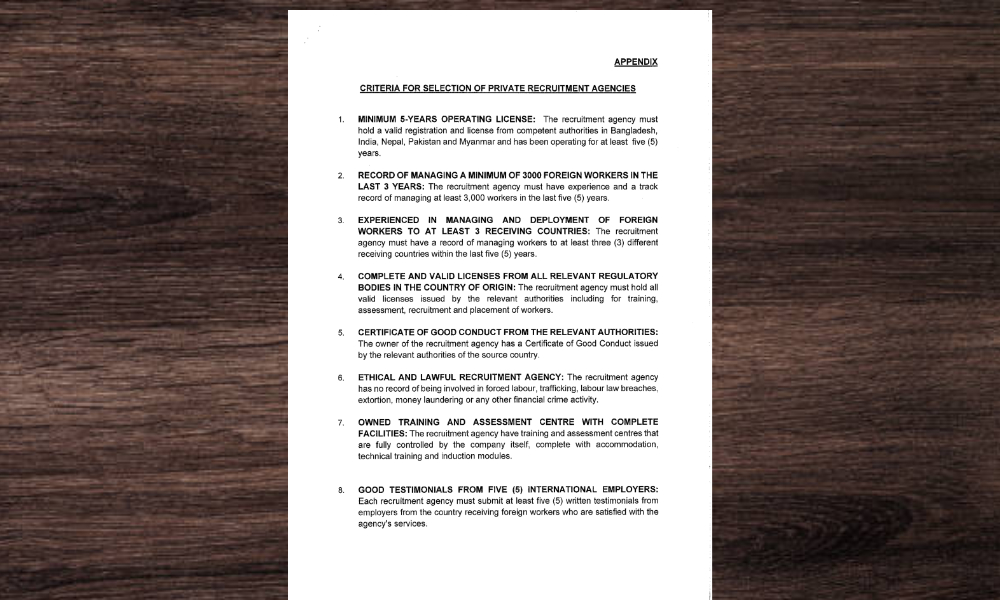
Other conditions set are having positive testimonials from at least five international employers, owning a large, permanent office ( about 10,000 square feet) that has been operating for at least three years, and having their own training centre.
‘Discriminatory’
Speaking to Malaysiakini, the Bangladesh Association of International Recruiting Agencies (Baira) and the Nepal Association of Foreign Employment Agencies (Nafea) said the 10 criteria set by the Foreign Ministry were "impossible" for almost all agencies, even experienced ones, to meet.
Both associations also claimed these conditions are merely a ploy to control the market and eliminate new agencies, in addition to several individuals in Malaysia being the “masterminds” behind an attempt to revive the syndicate system.
“The policy sounds good on paper, but 99 percent of agencies in Bangladesh and other countries cannot fulfil it. A large part of these criteria is irrelevant, unethical, and malicious.
“The 10 criteria are ‘illogical and discriminatory’, as the migrant worker market to Malaysia was closed for a long time - including from 2009 to 2012 - and then controlled by a syndicate between 2017 and 2024.
“How can an agency send workers to three different countries if the market is closed? This is crazy,” said former Baira joint secretary-general-1 Mohammed Fakhrul Islam.
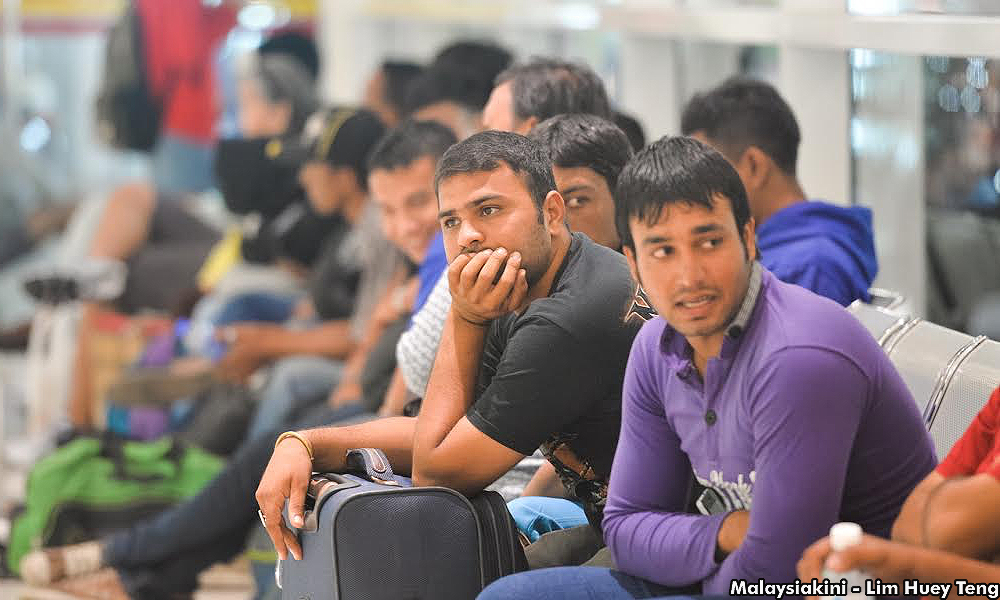
Meanwhile, Nafea also voiced similar concerns over the move, saying Malaysia's move to limit only a few agencies to operate is “unfair and contradicts international norms”.
“This decision denies the right of Nepalese agencies to operate freely and will increase the financial burden on Nepalese workers.
“A system like this will undermine the overseas employment policy of the Nepalese government and open the door to corruption and worker exploitation.
“Overseas employment involves the mutual interests of employers and workers. Limiting licensed agencies is an attack on the right to fair competition,” said Nafea secretary-general Mahesh Kumar Barnet.
The association urged the Nepalese government not to recognise any syndicate and demanded that Malaysia withdraw the policy.
‘Ask Human Resources Ministry’
When contacted, the Foreign Ministry referred Malaysiakini's queries to the Human Resources Ministry.
"The Foreign Ministry takes note of the queries regarding the diplomatic note sent to the embassies of several source countries concerning the rationalisation process of migrant worker recruitment agencies.
“This step is part of the government's initiative to strengthen ethical and transparent practices in migrant worker recruitment.
"In this regard, Human Resources Ministry is the lead ministry responsible for formulating and setting the policy on migrant worker recruitment.
"The (Foreign Ministry's) role is solely to convey the policy set by the government through the proper diplomatic channels. Any detailed questions about the policy should be directed straight to Human Resources Ministry," a source from the ministry said.
Bangladesh stops probe
On July 31, Malaysiakini reported that Bangladesh agreed to halt its investigation into the alleged syndicate exploiting Bangladeshi citizens seeking work in Malaysia.
This was after a source claimed the decision was reached at a meeting in July between representatives of the Bangladeshi government and Human Resources Ministry officials in Kuala Lumpur.
Malaysiakini was also told the meeting was held following a letter from the Malaysian government to Bangladesh requesting that the investigation into the allegations, deemed unfounded, be stopped.
The letter dated April 23 was said to be sent from a senior Human Resources Ministry official to a senior official at the Bangladeshi Expatriates' Welfare and Overseas Employment Ministry.

In the letter, the Human Resources Ministry asked Bangladesh to address the syndicate issue exploiting Bangladeshi citizens seeking work in Malaysia from 2022 to 2024 to ensure a smooth and reliable worker recruitment process.
The letter also stated that most allegations of human trafficking and money laundering were unsubstantiated and harmed Malaysia’s reputation.
To date, the Human Resources Ministry has refused to comment on the existence of the letter.
Protest letter to Anwar
Meanwhile, a local activist has sent a letter to Prime Minister Anwar Ibrahim to protest the government’s new conditions for migrant worker recruitment.
When contacted, V Sivam, who is also a PKR member, confirmed sending the letter to Anwar.
“The process of selecting licensed agencies in this new policy is not transparent and may be biased, which could open the door to domination by a few parties, as well as the risk of a syndicate hidden amidst the approved agencies.
“This rationale is expected to affect many legitimate, long-operating local agencies with good records, as only a handful of agencies may be selected to continue operating.
“This is considered unfair to local operators who have complied with existing regulations,” he said.
Sivam also stressed that the policy is not consistent with the spirit of openness and good governance emphasised in the Madani government’s policy, as it was made without considering the views of the industry and stakeholders and could damage Malaysia's image in the eyes of the world.
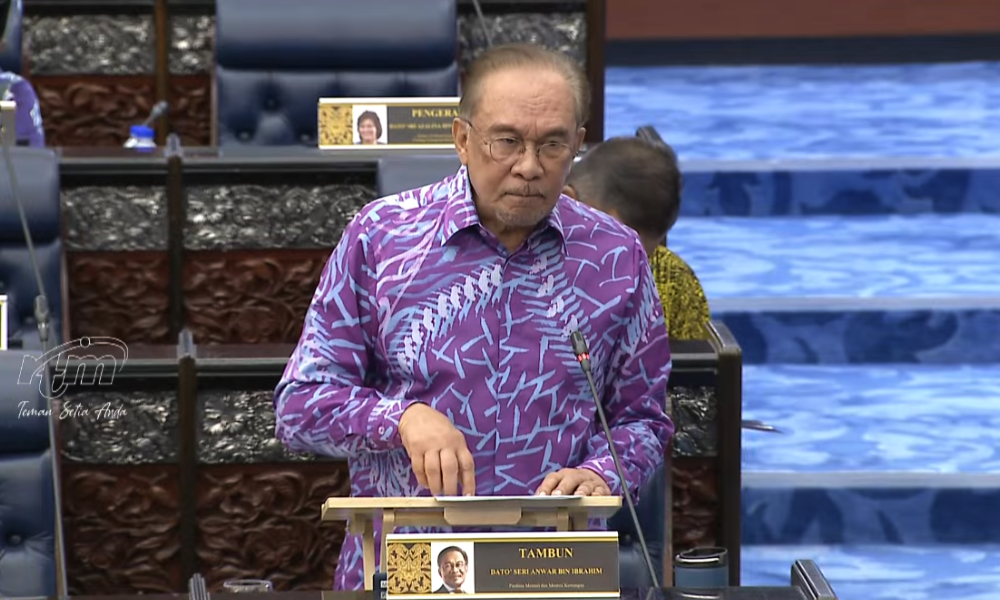
“I appeal to the prime minister to review and cancel the implementation of the policy in the memo, to ensure equal opportunities for all worker recruitment agencies and to maintain the principles of fairness, transparency and integrity in the country’s migrant labour affairs,” he said.
In September last year, it was reported that a Bangladeshi agency owner filed a police report against 103 individuals (agency owners) on allegations of being involved in a syndicate exploiting Bangladeshi citizens seeking work in Malaysia.
The police report referred to allegations of misappropriation and human trafficking linked to the process of sending workers from that country to Malaysia, through agencies chosen via the memorandum of understanding between the two countries signed on Dec 19, 2021.
More than 480,000 Bangladeshi workers entered Malaysia between 2022-2024 through the 103 agencies licensed by both governments.
Several local and Bangladeshi NGOs claimed that the decision by both countries to allow only 103 agencies to bring in migrant workers resulted in many workers being trapped by false promises after paying up to RM25,000 in recruitment fees, often through debt.
/file/publisher-c1a3f893382d2b2f8a9aa22a654d9c97/2023/11/40c95b2b9e77413098cdbac5d1fec6df.jpg)
/file/publisher-c1a3f893382d2b2f8a9aa22a654d9c97/2025/03/6e35684bca7d4bff8f44f5ba20666909.jpg)
/file/publisher-c1a3f893382d2b2f8a9aa22a654d9c97/2025/10/8cf461e73c13414a319752a1298ae41d.jpg)
/file/publisher-c1a3f893382d2b2f8a9aa22a654d9c97/2025/10/844a967cbc89d05ec7718aad60252e21.jpg)
/file/1005/ed0ab83aceeee13ddaee718d6b486654.jpg)


Report this comment
Are you sure you want to delete this comment?
This action cannot be undone.